Webinar 3: A Deeper look to Chronic Pelvic Pain
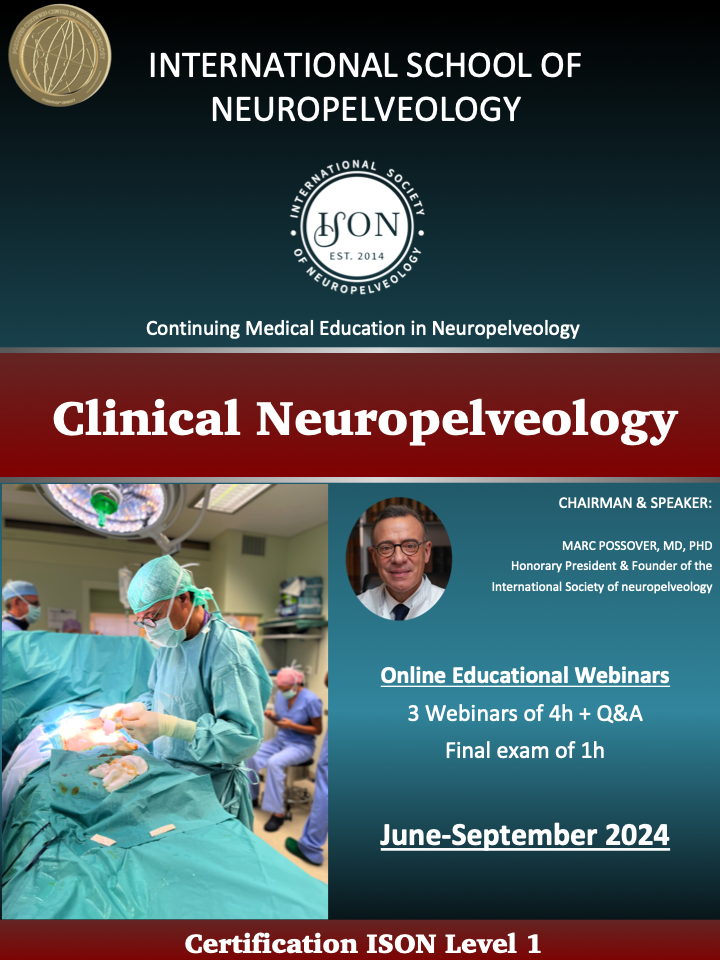
The International Society of Neuropelveology (ISON) is proud to present an exciting new webinar series: “Neuropelveology Uncomplicated”. Taking place once a month from May to September, this series offers a fascinating insight into the world of Neuropelveology.
Designed for a diverse audience, from patients to physiotherapists, osteopaths, medical students, gynecologists, and pelvic surgeons, “Neuropelveology Uncomplicated” provides a unique opportunity to engage with this field.
The webinars are free of charge and will be conducted via Zoom, making them accessible to anyone interested in Neuropelveology.
This inspiring initiative was brought to life through the collaboration of the Young ISON Endoscopists Board, including Dr. Ana Sierra, Dr. Abhishek Mageshikar, Dr. Henrique Abrao, and Dr. Michael Adamaczyk, in close cooperation with Prof. Possover.
Save the dates and explore the world of Neuropelveology with “Neuropelveology Uncomplicated”!